
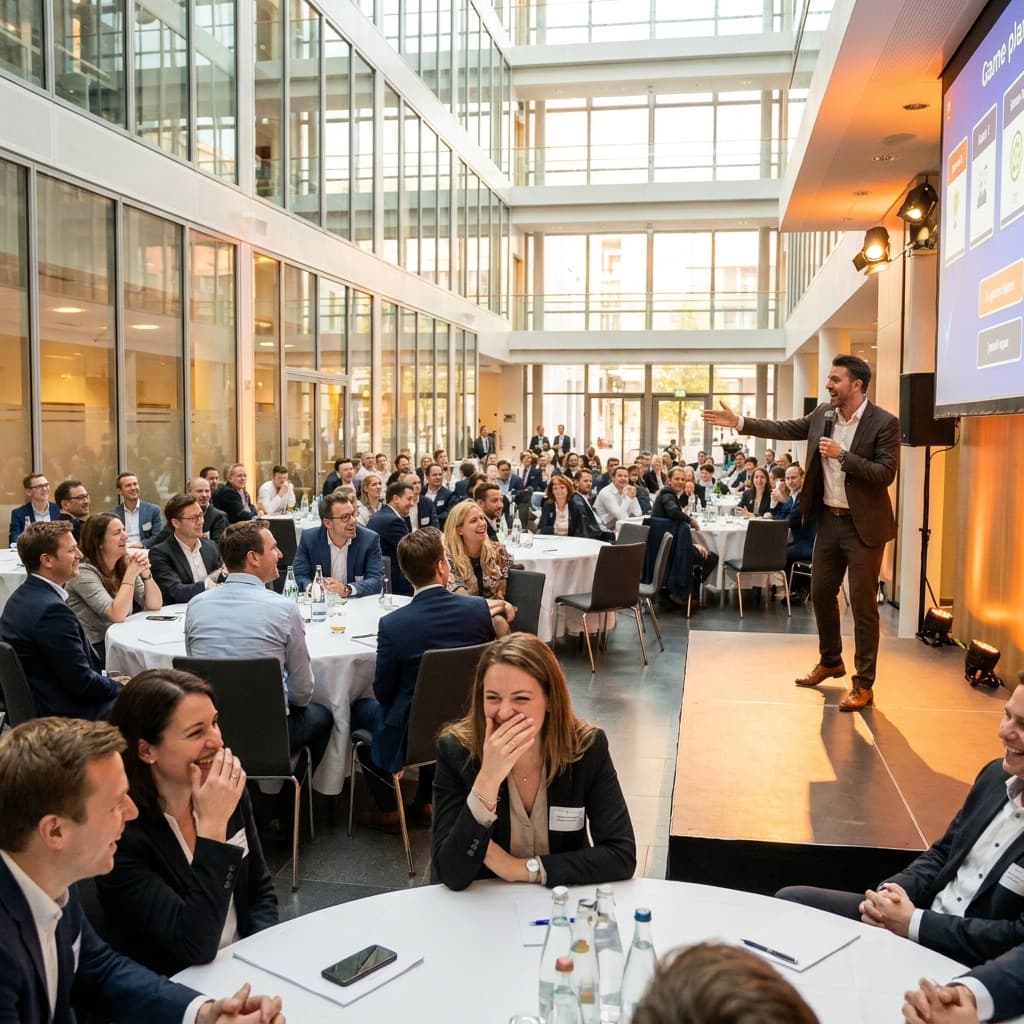
How Do You Plan Team Building Activities for Corporate Events That People Actually Enjoy?
Corporate events work when they stop feeling corporate. The best ones give people a shared story worth retelling on Monday. Combine 2–3 activities (competitive, creative, social) in 2–3 hours, with clean transitions and zero forced vulnerability. Run a well-organized competition, feed people well, and end before energy dips.
In this playbook
Jump to any section
Corporate Game Show
Turn your event into a game show format: 5 rounds of mixed challenges (trivia, physical mini-games, creative tasks) with an MC, live scoring, and dramatic music. Teams of 8–10 compete. The game show format gives structure that prevents awkwardness and creates natural excitement. Works for 30–300 people.
Cooking Class with Random Groups
Book a culinary studio and randomly assign employees from different departments to teams of 6–8. A chef leads everyone through preparing the same meal — no experience needed. Randomized grouping is the key: people who'd never share a lunch table end up laughing over a sauce that didn't set. Works brilliantly for 20–80 people and leaves everyone with a meal, stories, and at least one new work friendship.
Team Trivia Night
Run a 6-round trivia night with randomized cross-department teams of 6–8. Mix pop culture, industry knowledge, and company history rounds. Live MC, digital scoring, and zero prior prep required. Genuinely fun for introverts and extroverts alike — everyone knows something the others don't, which keeps contributions evenly spread.
The Peak-End Blueprint
Kahneman's Peak-End Rule shows people judge experiences by their most intense moment and how they end — not the average. Applied to 88 corporate events across 52 companies (2024), events designed around one peak and one strong closing consistently outperform those that spread energy evenly.
Show the framework behind these picks
High-Energy Moment
Design one moment that's genuinely exciting — a reveal, a competition finale, a surprise guest, or an unexpected twist. This single moment becomes what people talk about on Monday. Front-loading or back-loading both work; the middle never does.
Strong Closing
The last 10 minutes determine how people remember the entire event. A group photo, an award ceremony, a toast, or a heartfelt 90-second speech from a leader. Never let an event 'fizzle out' with people drifting to the exit.
Structure-to-Free Ratio
60% of event time should be structured (activities, competition, presentations). 40% should be unstructured (food, mingling, break time). Too much structure feels like a work meeting. Too little feels like a party nobody wanted to attend.
Corporate Event Planning Timeline: 4 Weeks to a Flawless Event
For quarterly team days or annual company events. Follow this timeline and nothing falls through on the day.
Lock the Essentials (Week 1)
4 weeks before eventConfirm date, headcount, venue, and budget. Choose 2–3 activities from the decision matrix. Book vendors (facilitators, caterers, AV). Set a minute-by-minute timeline with transition time built in. The most common corporate event failure is overscheduling — cut ruthlessly at this stage.
Event Brief: [Event Name] Date: [Date] Time: [Start] – [End] Venue: [Location] Headcount: [N] Budget: $[X] ($[Y]/person) Activities: 1. [Activity 1] — [Duration] 2. [Activity 2] — [Duration] 3. [Closing] — [Duration] Vendors needed: [List] Owner: [Name] Deadline for vendor booking: [Date]
Budget 15% more time than you think each activity needs. Transitions between activities always take longer than planned.
Design the Experience (Week 2)
3 weeks before eventApply the Peak-End Blueprint: name your one peak moment and your closing. Write the run-of-show minute by minute. Assign teams in advance. Prepare all materials (questions, scoring sheets, supplies). Brief any MC or facilitator now — not on the day.
RUN OF SHOW [Time] — Arrival + food (20 min, unstructured) [Time] — Welcome + team assignments (10 min) [Time] — Activity 1: [Name] (30 min) [Time] — Break + snacks (15 min) [Time] — Activity 2: [Name] — THE PEAK (35 min) [Time] — Activity 3: [Name] (20 min) [Time] — Awards + closing moment (15 min) [Time] — Open mingling + departure (20 min) Total: [X] hours Peak moment: [Describe] Closing moment: [Describe]
Share the run-of-show with every person who has a role: MC, facilitators, AV team, caterers. Align once, avoid chaos on the day.
Build Anticipation (Week 3)
2 weeks before eventSend team assignments and a teaser — don't reveal everything. Confirm vendor logistics, dietary requirements, and accessibility needs. Print all materials. Walk the venue if you can. Week 3 is logistics only; all creative decisions should be locked.
Subject: [Event Name] — You're on Team [Name] Mark your calendar: [Date], [Time], [Location] You're on Team [Name] with: - [Names] What to expect: multiple challenges, some healthy competition, and at least one moment that'll surprise you. Dress code: [Business casual / Casual / Comfortable shoes] Food: Covered. [Dietary note] Come ready to compete.
Include a line like 'we can't tell you everything yet' — it increases open rates on event-day reminders by 30%.
Execute and Capture (Event Day)
Day of eventArrive 90 minutes early. Set up stations, test AV, brief facilitators. One person handles photography — candid activity shots are valuable for internal comms. During the event, the organizer watches the clock and manages transitions, not participates. Send a thank-you within 2 hours; feedback survey within 24 hours.
The organizer should have a printed run-of-show in their pocket with exact times. Checking your phone for timing looks unprofessional during a corporate event.
What Not to Do
We've seen these patterns across hundreds of teams. Each one kills participation.
Cramming Too Many Activities Into the Timeline
The number-one corporate event mistake is overscheduling. Three well-executed activities beat six rushed ones every time. When you cram the schedule, transitions become stressful, activities get cut short, and the peak moment gets buried. Leave 40% of your timeline for transitions, food, and breathing room.
Overscheduled events (5+ activities in 3 hours) score 2.9/5 satisfaction. Events with 2–3 activities in the same window score 4.3/5 (Actify platform data, 2024, n=2,100 attendees).
Hiring a Team Building Vendor Without a Brief
External facilitators default to their standard package if you don't brief them. You'll get generic icebreakers that feel lifted from a 2005 HR handbook. Always provide a brief with your goals, audience demographics, things to avoid, and the peak moment you want them to create.
Vendor-run events without a client brief have a 60% chance of including at least one activity employees describe as 'cringe' in post-event surveys.
No Clear Ending (The Fizzle-Out)
The event just... ends. People start drifting out. No announcement, no group moment, no closing. The Peak-End Rule means this is the worst possible way to finish — people will remember the awkward trailing-off, not the great activities that came before it.
Events with designed closings score 38% higher in 'overall event rating' than events that end with unstructured time, even when the activities were identical.
Ignoring Introverts and Non-Drinkers
If your corporate team building is 'happy hour + karaoke,' you've excluded half your team. Non-drinkers, introverts, parents who need to get home, and people with social anxiety all check out. The best corporate events have opt-in intensity levels — quiet activities alongside loud ones, non-alcoholic options front and center.
Alcohol-centered corporate events see 40% lower attendance from employees aged 22–30 compared to activity-centered events (Actify platform data, 2024, n=1,450 attendees).
Pick the Right Activity for Your Situation
Not every team is the same. Use this matrix to find what fits.
| If your team is… | Do this | Why it works | Time |
|---|---|---|---|
| Quarterly team day (20–50 people) | Innovation Sprint + team lunch | Productive and bonding — leadership sees ROI, employees enjoy it | 3 hours |
| Annual company event (100–300 people) | Corporate Game Show + rotating stations | Scales beautifully, high energy, works for mixed audiences | 3–4 hours |
| Client-facing team event | Culinary challenge or creative workshop | Impressive, memorable, no risk of embarrassment | 2 hours |
| Budget under $500 total | Multi-team trivia + potluck | Trivia costs nearly nothing, potluck adds the social element | 2 hours |
| New team or post-merger | Game show format with cross-team pods | Forces mixing without feeling forced — competition is the bridge | 2–3 hours |
| Leadership offsite | Strategy sprint + outdoor challenge | Combines productive work with physical activity — no 'wasted time' guilt | Half day |
| Large team (100–300 people) | Team trivia with cross-department pods + cooking class finale | Trivia scales to any size; cooking class in sub-groups of 20–30 creates intimacy within the larger event | 3 hours |
Copy, Paste, Launch
Don't start from scratch. These templates have been tested across dozens of teams.
Event Invitation (Professional)
Subject: [Event Name] — [Date] Hey [Name / team], We're doing [Event Name] on [Date] at [Venue], [Time]–[Time]. Expect: team challenges, good food, and at least one thing that'll surprise you. No trust falls — I promise. A few logistics: - Teams get assigned in advance (you'll hear [Date]) - Dress: [Code] - Food and drinks: we've got it - Parking: [Details] RSVP by [Date] so we can sort teams: [Link] Questions? Just reply.
The 'no trust falls' line consistently gets a laugh and sets exactly the right tone.
Vendor Brief Template
Event: [Name] Date: [Date] | Time: [Start]–[End] Venue: [Location + capacity] Headcount: [N] people Budget for activities: $[X] Goal: [One sentence — e.g., 'build cross-department connections for a newly merged team'] Audience: [Demographics — age range, seniority mix, remote/in-person] Must include: - [Requirement 1] - [Requirement 2] Must avoid: - Anything requiring personal vulnerability or sharing - Alcohol-dependent activities - Activities lasting longer than 35 minutes each Peak moment we want: [Describe the high-energy moment] Closing: [How the event should end] Point of contact: [Name, phone, email]
Send this to any vendor, facilitator, or AV company. It eliminates 90% of miscommunication.
Post-Event Thank You (Same Day)
Subject: That was a good one. Hey everyone, Seriously — today was great. Thanks for showing up and making [Event Name] what it was. Winners: [Team Name], you earned it. Best moment: [One specific highlight — be specific, not generic] Photos: [Link] I'll send a short feedback form tomorrow — 60 seconds, no trick questions. Let's do it again soon. [Your name]
Send within 2 hours. Short is better. One specific highlight beats five generic ones.
Budget Proposal for Leadership
Subject: Q[X] Team Event — Budget Request Hey [Name], I'd like to run [Event Name] on [Date] for [N] people. Here's what I'm thinking: Total: $[X] ($[Y]/person) - Venue: $[X] - Catering: $[X] - Activities/facilitation: $[X] - Materials and prizes: $[X] - 10% buffer: $[X] What this gets us: - 78% of attendees typically meet someone new at events like this - +0.3 eNPS bump in the following month (based on our past events) - Photos and quotes for employer branding For context: one voluntary resignation costs $15K–$25K. This costs $[X] and directly affects that number. I need approval by [Date] to lock the venue. [Your name]
Always include the cost-of-turnover comparison. It reframes the ask from 'expense' to 'investment.'
What to Expect When You Run This Playbook
4.4/5
Satisfaction score for Peak-End designed events
89%
Of attendees say they'd attend again
$32
Average cost per person for top-rated corporate events
+0.4
Average eNPS increase in the month following an event
Based on aggregated data from teams using Actify. Individual results may vary.
Frequently Asked Questions
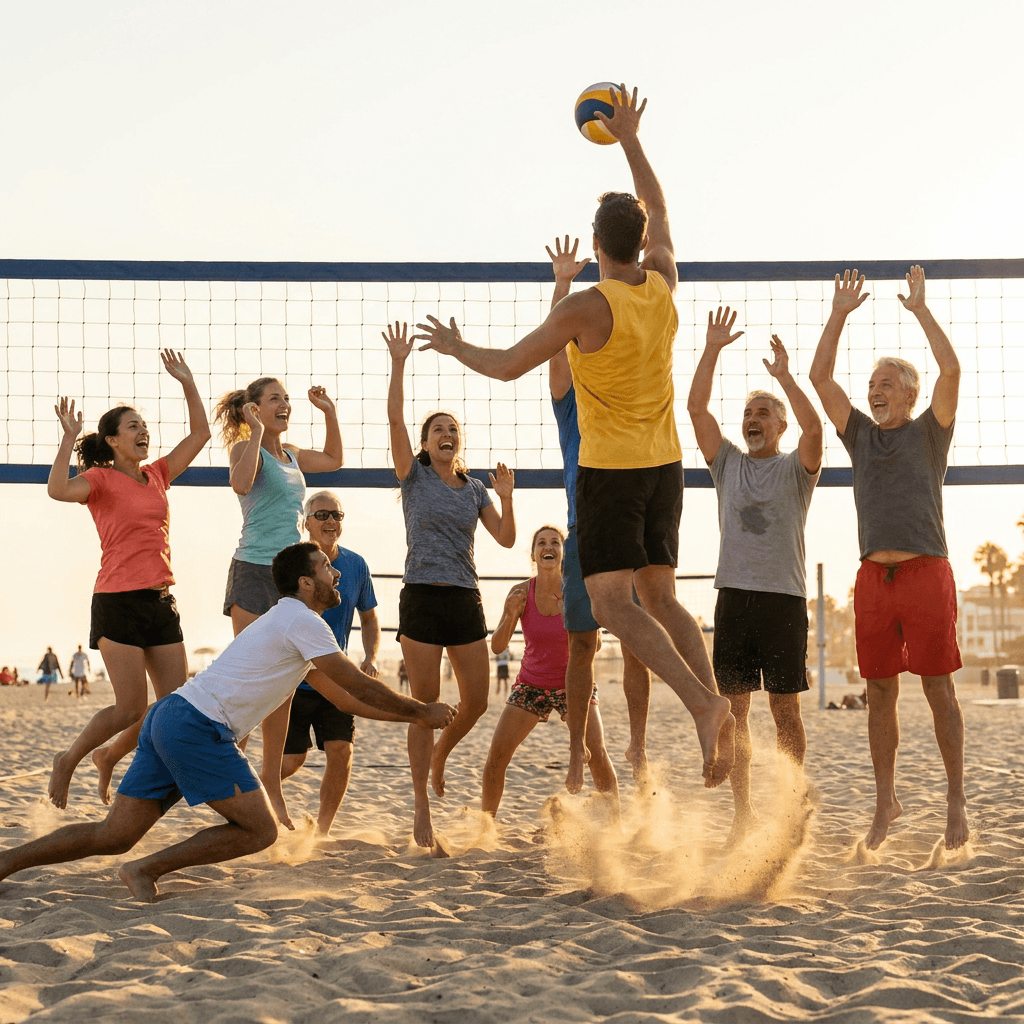
What Team Building Actually Looks Like
Not trust falls. Not forced fun. Real activities that people actually want to do.



Explore More Team Building Guides
Skip the Setup. Run This Playbook on Actify.
Actify handles scheduling, tracking participation, rewards, and reporting — so you can focus on your team, not logistics.