

What Team Building Games for Work Actually Boost Engagement (Not Just Kill Time)?
Games that work at work take under 15 minutes, need zero prep from participants, and leave people talking about it afterward. Best formats: quick-fire rounds (trivia, word games), collaborative puzzles (escape-room-style), and creative competitions (pitch contests). One rule: if the game takes longer to explain than to play, pick a different one.
In this playbook
Jump to any section
Two Truths and a Metric
A work-themed twist on Two Truths and a Lie. Each person shares three company or industry stats — two real, one fake. The team votes on which is fake. Takes 2 minutes per person, sparks real discussion about the business, and surfaces knowledge gaps no one knew existed.
60-Second Pitch
Give each team of 3–4 people a random product (stapler, houseplant, coffee mug) and 5 minutes to prepare a 60-second sales pitch. Other teams vote on the best pitch. Reveals hidden presentation skills, creates genuine laughter, and takes under 20 minutes total.
Reverse Charades
Instead of one person acting while the team guesses, the entire team acts while one person guesses. This simple inversion makes charades 10x more energetic because everyone is moving and laughing simultaneously. Use work-related prompts for extra relevance.
The 5-Minute Rule
Across 1,200+ team game sessions (Actify, 2024), games explainable in under 5 minutes have 3x higher satisfaction than those requiring longer setup. The 5-Minute Rule: every game must pass three gates. Fail one, pick a simpler game.
Show the framework behind these picks
Explain It
If you can't explain the rules in under 2 minutes, the game is too complex for a work setting. People's patience for learning new rules at the office is near zero — they came to work, not game night.
Start It
Setup time should be under 1 minute. No downloading apps, no creating accounts, no distributing materials across 6 tables. If it requires a 'setup phase,' most of the room checks out.
Finish It
The game should have a natural endpoint within 15 minutes. Open-ended games lose energy fast. A tight time constraint creates urgency, focus, and a clean stop that leaves people wanting more — not less.
Game Day Playbook: Run a Weekly Team Game in 15 Minutes
How to make regular team games feel like a natural part of the week — not a mandatory activity. Works for in-office, remote, and hybrid teams.
Pick Your Slot (Week 1)
Find a recurring 15-minute windowAttach the game to an existing meeting — last 10 minutes of a standup, first 5 of a Friday all-hands, right after lunch on Wednesdays. Never schedule a standalone 'game time.' A separate calendar event feels optional in the wrong way. Embedded in an existing meeting, it becomes part of the rhythm.
Hey team — starting this [Day], we're going to use the last 10 minutes of our [meeting name] for a quick team game. This week: Two Truths and a Metric. Takes 10 minutes, zero prep on your end. If it's terrible, we'll try something different next week.
Tuesday-Thursday slots get 30% higher engagement than Monday or Friday. People are mentally checked out at the edges of the week.
Run Game #1 (Same Week)
During your chosen meeting slotStart with the simplest game available. Two Truths and a Metric or Reverse Charades — zero materials, 30-second explanation. Your only job: make it feel low-stakes. Laugh at yourself. Don't keep score. End 2 minutes early, not late. The goal of game #1 isn't fun — it's proving this won't be painful.
If you're running the game in a video call, have everyone turn cameras on. Games with cameras off feel like podcasts, not team building.
Rotate Game Types (Weeks 2–4)
Same slot each week, different gameWeek 2: collaborative (mini escape room puzzle, group word chain). Week 3: creative (60-Second Pitch, drawing challenge). Week 4: competitive (speed trivia, bracket). Rotating types reveals which format your team responds to. Some teams love competition; others prefer collaboration. You won't know until you test all three.
This week's game: 60-Second Pitch Teams of 3. You'll get a random object. 5 min to prep a 60-second pitch. We vote on the winner. No prizes. Just glory. See you at [Time] in [Location/Link].
Keep a simple spreadsheet: game name, type (social/creative/competitive), and a 1-5 energy rating from the room. After 4 weeks, the data tells you what to keep.
Let the Team Drive (Month 2)
After your first 4 gamesPost: 'We've run 4 games — which was your favorite? Anyone want to run next week's?' The transition from organizer-led to team-led is the signal the program is working. When someone volunteers, your job shifts to enabler: share a list of approved games with quick explainers, then step back.
If you're on Actify, the platform has a game library with one-click setup for 40+ team games — no planning required from whoever's running it.
What Not to Do
We've seen these patterns across hundreds of teams. Each one kills participation.
Picking Games That Require Talent
Drawing games exclude people who can't draw. Singing games exclude people who are self-conscious. Physical games exclude people with limitations. The best team building games require no talent — just willingness to participate. Knowledge, speed, and creativity are more inclusive than skill-based challenges.
Talent-based games see the same 25% of people dominating every round. Skill-neutral games spread participation evenly — 85% of participants actively engage vs 40% in talent-dependent formats (Actify platform data, 2024, n=1,200).
Running the Same Game Every Week
Trivia is great. Trivia every single week for 3 months is a morale drain. Repetition kills the novelty that makes games effective. Rotate between at least 3 game types: competitive, collaborative, and creative.
Teams that run the same game format weekly see participation drop from 72% to 31% over 8 weeks. Teams rotating formats maintain 65%+ participation indefinitely (Actify platform data, 2024, n=1,200).
Games That Take Too Long to Explain
If you spend 5 minutes explaining rules and people are still confused, you've already lost the room. Complex rules create anxiety in people who are worried about looking foolish. The best work games can be explained in one sentence: 'Guess which stat is fake,' 'Pitch this product in 60 seconds,' 'Act this out as a team.'
Games requiring more than 2 minutes of rule explanation score 2.4/5 on enjoyment vs 4.1/5 for games explained in under 1 minute.
Making It Too Competitive
Leaderboards, prizes, and championship brackets are fun for competitive personalities and stressful for everyone else. Keep competition light — bragging rights only. The moment real rewards are on the line, people start optimizing to win instead of optimizing to connect.
Prize-based games see 20% higher engagement from competitive personalities but 35% lower engagement from the rest of the team. Net effect: lower overall participation.
Pick the Right Activity for Your Situation
Not every team is the same. Use this matrix to find what fits.
| If your team is… | Do this | Why it works | Time |
|---|---|---|---|
| First game ever with the team | Two Truths and a Metric | Zero setup, zero risk, reveals interesting things about coworkers | 10 min |
| Remote or hybrid team | Virtual trivia or emoji-based guessing games | Works async or sync, no camera fatigue, easy on bandwidth | 15 min |
| Team of 20–50 people | 60-Second Pitch (breakout teams of 3–4) or team trivia with randomized pods | Both formats scale without losing the small-group energy — everyone participates, not just the loudest voices | 20–30 min |
| Large team (50+ people) | Randomized trivia pods (6–8 per team) with live cross-team scoreboard | Works for 50–300 people; randomized grouping forces new connections; digital scoring keeps it moving | 30–40 min |
| Energy is low (Monday morning, post-lunch) | Reverse Charades or rapid-fire word association | Physical movement and speed snap people out of sluggish states | 10 min |
| New team members just joined | Speed networking game (2-min paired conversations, rotate) | Structured introductions without the awkwardness of 'tell us about yourself' | 15 min |
| Team is already game-savvy | Mini escape room puzzle or strategy game | Higher complexity is welcome when the team already has game culture | 30–45 min |
Copy, Paste, Launch
Don't start from scratch. These templates have been tested across dozens of teams.
Weekly Game Announcement (Slack/Teams)
This week's game: [Game Name] How it works: [One sentence — seriously, just one] When: [Day] at [Time], during [meeting name] Teams: [Solo / pairs / groups of N] Time: [X] minutes No prep. Just show up.
Post the morning of — not days in advance. Same-day announcements get better turnout because there's no time to overthink opting out.
Game Rotation Calendar (Monthly)
Game plan for [Month]: Week 1: Competitive — [Trivia / Speed quiz / Bracket game] Week 2: Collaborative — [Puzzle / Escape room / Word chain] Week 3: Creative — [Pitch contest / Drawing challenge / Storytelling] Week 4: Social — [Two Truths / Would You Rather / Speed networking] Same slot every week: [Day] at [Time]. Different game, same vibe.
Pin this in your channel. Predictable timing + varied content is the formula that sustains weekly games.
Remote Game Setup Message
Quick game before we dive into the agenda today. [Game name] — works like this: [one sentence] I'll go first to show you how it goes. [Facilitator demonstrates] Who's next? Just unmute and jump in. We'll do 3 rounds — about 10 minutes.
Go first yourself, every time. Silence after 'who wants to start?' kills remote game energy instantly.
Game Feedback Survey (3 Questions)
30 seconds — reply with numbers: 1. Fun level? (1–5) 2. Play again? (Yes / Maybe / No) 3. What would you rather try next week? (A) Trivia (B) Creative challenge (C) Team puzzle (D) Surprise me See you [Day].
Run this every 4 weeks, not every session. Over-surveying kills the casual vibe.
What to Expect When You Run This Playbook
73%
Average weekly participation after 4 weeks of games
89%
Of participants say games improved team communication
$0
Cost of the 10 highest-rated team building games
12 min
Average game length for top-performing formats
Based on aggregated data from teams using Actify. Individual results may vary.
Frequently Asked Questions
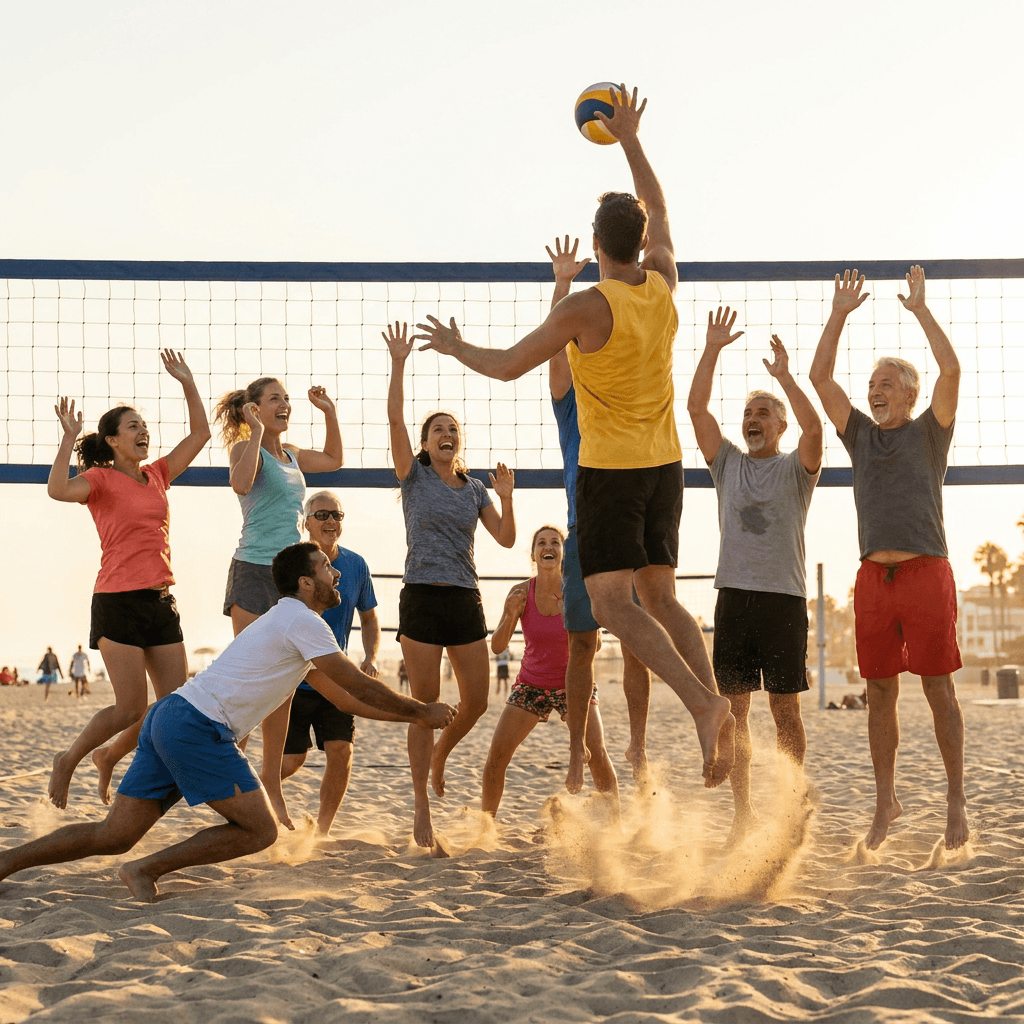
What Team Building Actually Looks Like
Not trust falls. Not forced fun. Real activities that people actually want to do.



Explore More Team Building Guides
Skip the Setup. Run This Playbook on Actify.
Actify handles scheduling, tracking participation, rewards, and reporting — so you can focus on your team, not logistics.