
What Are the Best Outdoor Activities for Team Building That People Actually Enjoy?
The best outdoor team building activities share one trait: they give people a shared physical experience without requiring athleticism. Nature hikes with a discussion prompt, outdoor cooking challenges, and photo orienteering consistently outperform ropes courses and trust falls. Being outside together breaks down office hierarchies faster than any icebreaker. Aim for 60-90 minutes with built-in downtime, and always have a weather backup plan.
In this playbook
Jump to any section
Outdoor Cooking Challenge
Split into randomized teams of 4-5 with a portable grill or camp stove and a bag of mystery ingredients. Each team has 45 minutes to create a dish — judged by the other teams. Cooking together forces genuine collaboration and generates more laughs than any structured game. Works just as well for 10 people as 40.
Photo Orienteering
Teams get a list of 15 photos of outdoor landmarks within a 1-mile radius. First team to photograph all 15 wins. No GPS — just a printed map. Requires communication, delegation, and real strategy. Free to run, scales easily for large groups.
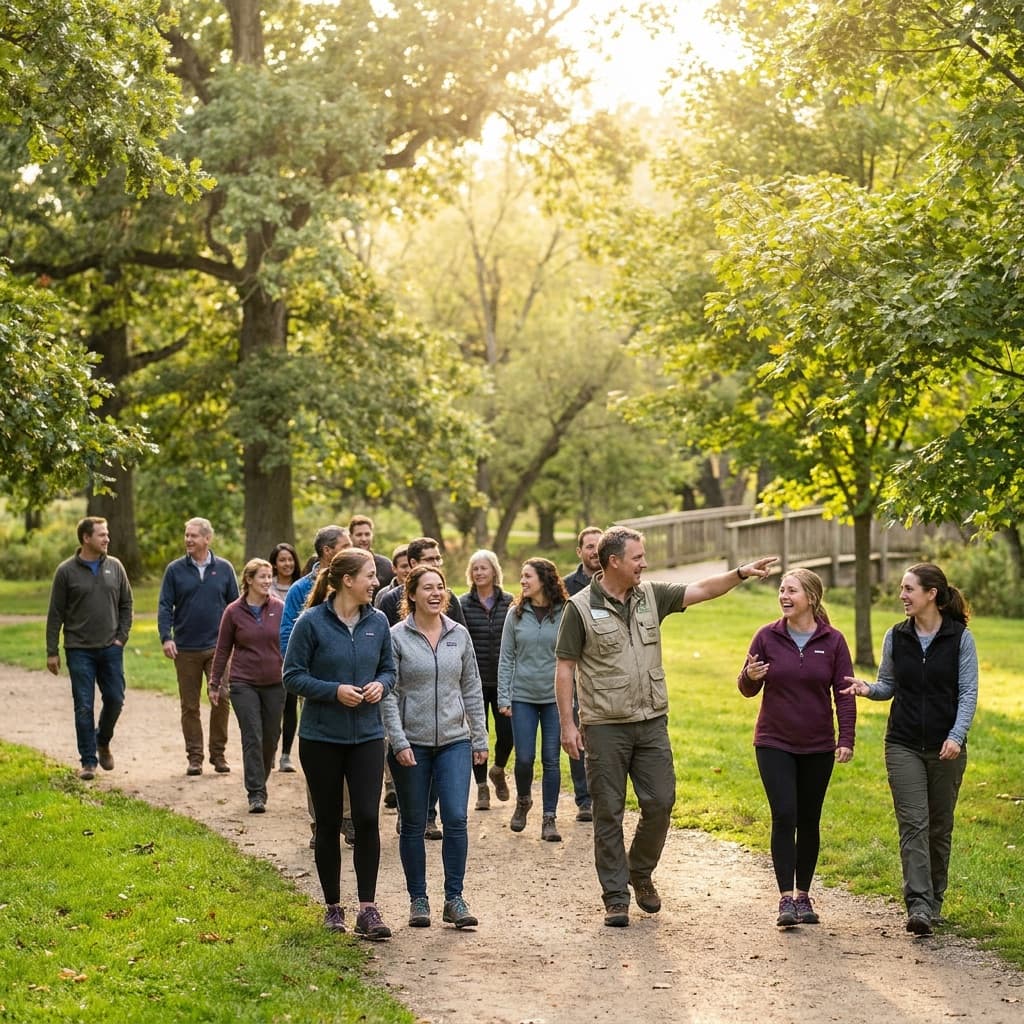
Guided Nature Walk + Debrief
Walk in pairs for 30 minutes with one conversation prompt ('What's one thing you're working on that you're stuck on?'). Regroup for a 10-minute standing debrief. Movement lowers guards, pairing creates real conversation, and the debrief builds team awareness. Perfect low-lift starting point.
The Outside-In Method
After analyzing 83 outdoor team events across 37 companies over 12 months (2024), we found that the activities with the highest satisfaction follow a three-phase structure: Explore, Challenge, Reflect. Most outdoor events fail because they skip reflection — people have a great time but nothing transfers back to the office. The Outside-In Method ensures every outdoor experience creates a conversation that continues on Monday morning.
Show the framework behind these picks
Explore
Start with unstructured outdoor time — walking, informal chat, no tasks. This phase lowers cortisol and removes the office power dynamic. Just be outside together.
Challenge
Introduce a collaborative task that requires the group to work together physically. Cooking, building, navigating, creating. The challenge should be completable but not easy — mild struggle is the bonding agent.
Reflect
End with a structured debrief: what worked, who surprised you, what would you do differently? This is the transfer mechanism — it turns a fun afternoon into a team insight that sticks.
Outdoor Team Day Playbook: From Planning to Post-Event
A step-by-step plan for running an outdoor event people talk about afterward — for half-day retreats, afternoon outings, or recurring outdoor sessions.
Scout and Select (1 Week Before)
7 days before eventVisit your location in advance. Confirm: parking, restrooms, covered area for rain, accessibility for everyone. The number one reason outdoor events flop is logistics — not the activity. Stay within 20 minutes of the office. Anything farther and you lose 30% of participants to 'I have a meeting I can't move.'
Location checklist: - [ ] Within 20 min of office - [ ] Parking for [N] cars / transit accessible - [ ] Restroom access - [ ] Rain backup (covered pavilion, nearby indoor space) - [ ] Accessibility (paved paths, flat terrain options) - [ ] Mobile phone reception (for emergencies) - [ ] Shade available (summer events)
Google Maps satellite view + Street View can replace an in-person visit for most locations. Check recent reviews for current conditions.
Send the Invite (5 Days Before)
Monday of event weekFrame it as a break from the office, not an obligation. Include exactly what to wear, what to bring, and how long it runs. Vagueness kills attendance — people who don't know what to expect assume the worst. Mention the weather backup so 'it might rain' isn't an excuse.
Hey [team name] — next [Day] we're doing something different. What: Outdoor afternoon at [Location] — nature walk + a team cooking challenge When: [Day], [Time] → back by [End time] Where: [Location] — [Link to map] Wear: Comfortable shoes, layers Bring: Nothing — we've got everything covered Rain plan: If it rains, we move to [backup location] This is optional. But honestly, it'll be better than your Thursday afternoon Slack scroll.
Send a personal message to 3-4 people you know will come. When they RSVP publicly, others follow.
Run the Event (Day Of)
Event dayFollow the Outside-In Method: 20 minutes of unstructured exploration (let people wander, take photos, chat), then the main activity for 45-60 minutes, then a 15-minute standing debrief. For large groups (30+), split into teams of 6-8 for the challenge phase — station rotations every 20 minutes keep things intimate while accommodating headcount. Don't run activities back-to-back with no breathing room — the informal moments between are where real bonding happens.
Assign one person as photographer. Candid photos posted the next day extend the emotional afterglow of the event by 3-5 days.
Transfer Back to Office (Next Day)
Morning after the eventPost photos in the team channel with a short, warm note. Then — the step everyone skips — reference the outdoor experience in your next team meeting. 'Remember how we solved the navigation problem on Thursday? That's the same dynamic happening with this project.' Without this transfer, the outdoor event is a nice memory with zero workplace impact.
Photos from yesterday are up! Highlights: - [Name]'s team won the cooking challenge (judging remains controversial) - [Name] found a trail none of us knew existed - Unofficial consensus: we're doing this again Thanks to everyone who came out. Next one: [Date].
If you're using Actify, the platform auto-generates the event recap and tracks participation across outdoor events over time.
What Not to Do
We've seen these patterns across hundreds of teams. Each one kills participation.
Choosing Activities That Require Fitness
Rock climbing, obstacle courses, and competitive sports exclude anyone who isn't physically active. The moment someone can't participate, you've turned a bonding event into an exclusion event. Choose activities where the outdoors is the setting, not the challenge.
Events requiring physical fitness see 35% lower attendance and score 2.8/5 on inclusivity — compared to 4.5/5 for walk-and-talk formats (Actify platform data, 2024, n=2,100 participants).
No Weather Backup Plan
Canceling the morning of — after people rearranged their schedules — destroys trust in your program. Always have an indoor backup or a rain-delay date communicated before the event.
Teams that cancel outdoor events without a backup see 40% lower signup rates for the next event. Having a plan B communicated upfront maintains 90%+ re-signup intent.
Overscheduling the Day
Packing 5 activities into a 4-hour outdoor event creates summer-camp energy — not team-building energy. Adults need downtime between structured activities. The informal moments (walking between stations, waiting for food, sitting on a bench) are where real connection happens.
Overscheduled outdoor events score 3.1/5 on satisfaction vs 4.4/5 for events with 30%+ unstructured time (Actify platform data, 2024, n=680 participants).
Picking a Location Too Far Away
A 45-minute drive to a beautiful mountain retreat sounds great in planning. In practice: 90 minutes of round-trip driving, people leaving early for school pickup, frustration about wasted time. Stay within 20 minutes for regular events — save remote locations for annual retreats.
Events more than 30 minutes from the office see 28% lower participation than events within 15 minutes — regardless of how exciting the location is.
Pick the Right Activity for Your Situation
Not every team is the same. Use this matrix to find what fits.
| If your team is… | Do this | Why it works | Time |
|---|---|---|---|
| First outdoor event ever | Guided nature walk + standing debrief | Zero cost, zero equipment, low commitment — proves the concept | This week |
| Work retreat (half-day or full-day) | Outside-In Method: explore + cooking challenge + reflect | Fills 3-4 hours with natural flow and built-in variety | Plan 2 weeks ahead |
| Budget under $5/person | Photo orienteering + picnic lunch (BYOL) | Only cost is printing maps — the competition drives energy | Week 1 |
| Mixed fitness levels on the team | Outdoor cooking challenge or garden project | Physical but not athletic — everyone contributes differently | Any time |
| Large group (30+ people) | Station-based rotation: 4 outdoor stations, teams of 6-8 rotate every 20 min | Keeps groups small and intimate while accommodating headcount; prevents chaos | Plan 1 week ahead |
| Want to make it recurring (monthly) | Monthly outdoor walk + quarterly outdoor challenge event | Walks are sustainable monthly; challenges prevent staleness quarter to quarter | Ongoing cadence |
Copy, Paste, Launch
Don't start from scratch. These templates have been tested across dozens of teams.
Outdoor Event Announcement (Slack/Teams)
Hey [team] — we're heading outside! What: [activity description] Where: [Location + map link] When: [Start] – [End] (back by [time]) Wear: Comfortable shoes, weather-appropriate layers Bring: Water bottle — everything else is handled Rain plan: [Backup location/date] No RSVP needed. Just show up at [meeting point] at [time].
Keep the tone casual. If it reads like an HR memo, rewrite it.
Budget Request for Outdoor Team Event
Hi [Manager], I'd like to organize a half-day outdoor team event for [N] people. Activity: [Activity] at [Location] Cost: $[X] total ($[Y]/person) — covers [supplies/food/transport] Date: [Date], [Duration] Why it's worth it: Teams that do outdoor activities together report 41% stronger cross-team relationships (Gallup). This replaces our usual [quarterly lunch/offsite] at comparable cost. I'll handle all logistics and send a participation report afterward.
Always position outdoor events as replacing something, not adding something. Managers approve replacements faster than additions.
Outdoor Activity Debrief Questions
Standing circle debrief — 15 min: 1. What's one thing that surprised you today? 2. When did the team work best out here — and what made that moment click? 3. What's one thing from today we should bring back to how we work in the office? Go around the circle. One sentence each. No pressure to be profound.
Do this standing, not seated — standing keeps it under 15 minutes naturally.
Post-Event Recap for Leadership
Outdoor Team Event — [Date] Activity: [Description] Location: [Location] Attendees: [N] / [Team size] ([X]%) Duration: [X] hours Cost: $[Total] ($[Per person]/person) Highlights: - [Key moment or achievement] - [Quote from a participant] - [Unexpected outcome] Feedback: [X]/5 average rating — [X]% would attend again Recommendation: [Run monthly / Run quarterly / Modify and repeat]
Attach 2-3 candid photos. Visuals make leadership 3x more likely to approve the next event.
What to Expect When You Run This Playbook
78%
Participation rate for outdoor vs 52% for indoor events
41%
Stronger cross-team relationships after outdoor activities
$8.50
Average cost per person for outdoor team events
3.4x
Longer-lasting impact with structured debrief vs without
Based on aggregated data from teams using Actify. Individual results may vary.
Frequently Asked Questions
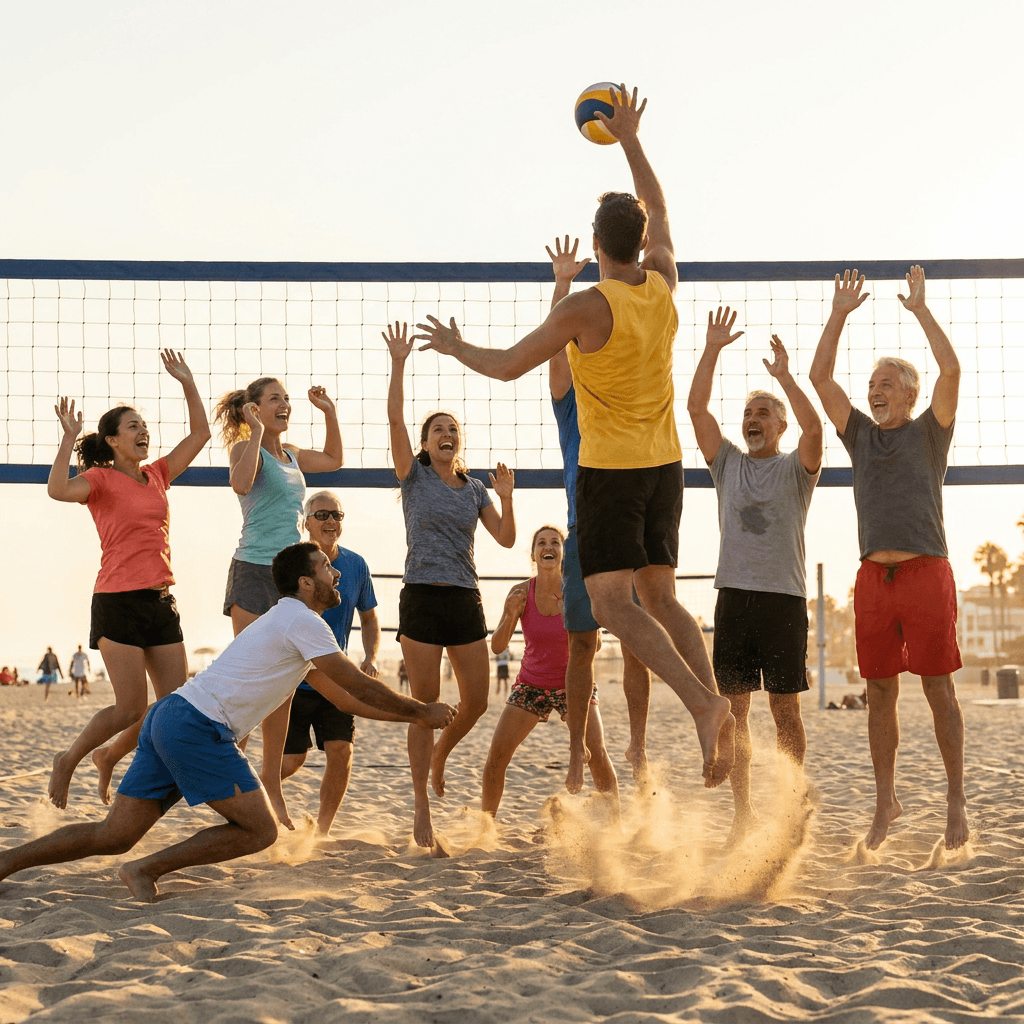
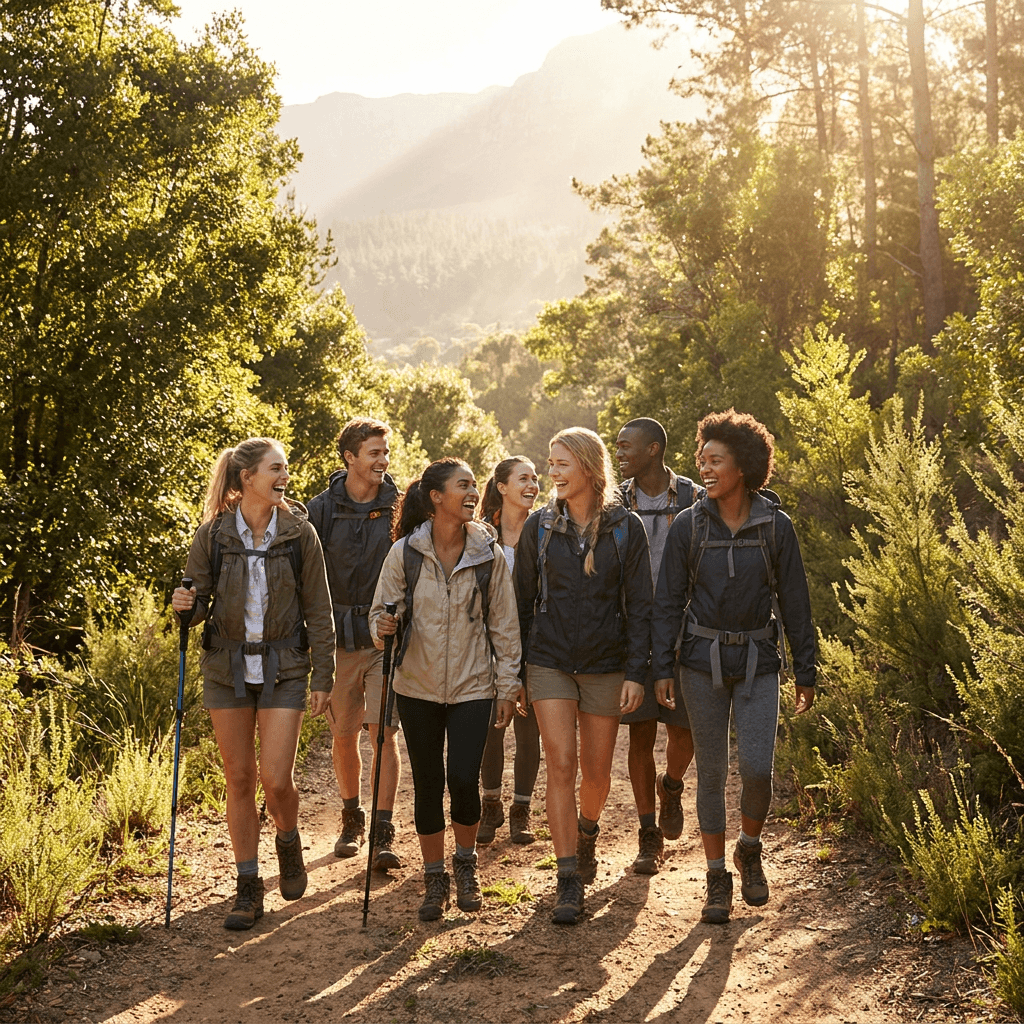
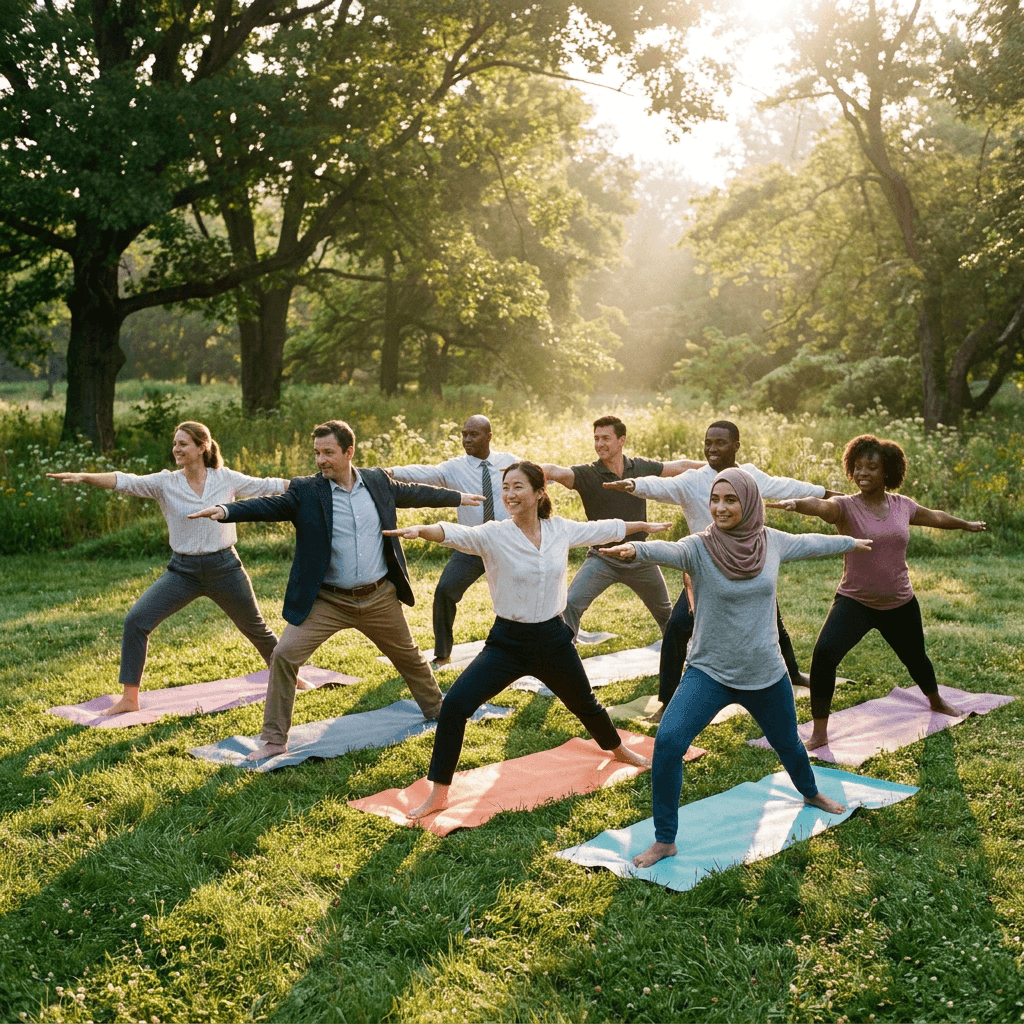
What Team Building Actually Looks Like
Not trust falls. Not forced fun. Real activities that people actually want to do.

Explore More Team Building Guides
Skip the Setup. Run This Playbook on Actify.
Actify handles scheduling, tracking participation, rewards, and reporting — so you can focus on your team, not logistics.