

What Are the Best Team Building Activities for Small Groups?
Small groups have one huge advantage: intimacy. With 3-10 people you can run activities impossible at scale — escape rooms where everyone contributes, cooking classes where randomized pairs work side by side, trivia rounds where nobody hides. Choose activities that amplify closeness rather than forcing it. Small groups don't need icebreakers; they need shared experiences that create inside jokes and mutual respect.
In this playbook
Jump to any section
Mini Escape Room Challenge
Pull up a free online escape room (Enchambered, Escape Team) and solve it together in 30 minutes. Small groups are the ideal escape room size — everyone has to contribute, there's nowhere to hide, and the problem-solving reveals each person's natural style. Rotate who picks the theme each month.
Cooking Class with Randomized Pairs
Book a local hands-on cooking class — pasta making, dumpling folding, cocktail mixing — and randomly assign who works with who at each station. The randomized pairs element is key: it creates conversation between people who wouldn't naturally pair up. Low-pressure, delicious, and the end product gives everyone something to celebrate.
Team Trivia Round
Pick a trivia app or pub-style format and run a 20-minute round together. No prep needed — just pull up Kahoot or Jackbox, pick a mixed-topic pack, and play. Trivia is naturally inclusive: every person on the team knows something the others don't, which means everyone gets a moment. Works in-person or remote.
The Campfire Method
Small groups have a unique dynamic: they can create genuine closeness, but they can also create cliques. After analyzing engagement patterns in 215 small teams over 18 months (2023-2024), the most cohesive groups rotate through three activity modes — like sitting around a campfire where conversation naturally shifts between stories, challenges, and shared meals. The ratio that prevents staleness while deepening bonds: 1 vulnerability activity, 1 collaboration activity, and 1 celebration per month.
Show the framework behind these picks
Vulnerability Activity
Activities that invite personal sharing: skill swaps, life-story rounds, 'teach me something' sessions. In a small group, these feel natural rather than forced. They build trust at a pace large groups can't match.
Collaboration Activity
Problem-solving together: escape rooms, trivia, group projects. Small groups are where real collaboration happens because there's no bystander effect — every person's input matters and is noticed.
Celebration Activity
Acknowledging wins: team lunch after a milestone, shout-out rounds, small rituals. In small groups, celebrations feel personal rather than performative. A handwritten note in a group of 5 hits differently than in a group of 50.
4-Week Plan: Building a Tight-Knit Small Team
Small groups bond faster than large ones — if you sequence the activities right. Go from 'coworkers' to 'crew' in one month.
The First Real Conversation (Week 1)
Pick any team meeting this weekAdd 10 minutes to an existing team meeting — no new calendar invite, that creates resistance. Use those 10 minutes for a Skill Swap: one person shares something non-work they're good at (cooking, chess, running, anything). Keep it casual. The goal is to learn something surprising about someone you see every day. In a group of 5, this takes exactly 10 minutes including questions.
Quick thing before we wrap — I want to try something new. Each week, one of us shares a skill or hobby for 10 minutes. I'll go first: [your topic]. It's completely optional, but who wants to take next week?
Go first. The person who starts sets the vulnerability level. If you share something genuine, everyone else will too.
The Shared Challenge (Week 2)
Wednesday or Thursday afternoonRun a 30-minute escape room or trivia challenge together. Small groups are perfect for both — everyone must contribute, there's no hiding in a team of 5. For escape rooms, book a video call or meeting room and pull up a free site. For trivia, open Kahoot and pick a mixed-topic pack. The problem-solving dynamic reveals working styles and builds trust faster than any trust fall.
Hey team — up for a 30-min escape room on [Day] at [Time]? Online, free, we solve it together. Totally optional — but fair warning, I heard the average team takes 45 minutes, so if we beat that, bragging rights are ours.
Pick a medium-difficulty puzzle or trivia pack. Too easy feels patronizing. Too hard feels frustrating. The sweet spot is 'we barely made it.'
The Small Celebration (Week 3)
Friday, end of dayIntroduce a 5-minute ritual: a quick shout-out round at the end of Friday. Each person names one thing a teammate did well that week. In a group of 5, this takes 5 minutes and costs nothing. The impact compounds — people start looking for things to acknowledge throughout the week, which changes how they see each other.
New optional Friday thing — before we sign off, a quick shout-out round. One specific thing someone on this team did this week that you appreciated. I'll go first: [Name], the way you handled [specific thing] this week was really solid. Who's next?
Be specific. 'Good job this week' is forgettable. '[Name], the way you handled that client call on Tuesday was impressive' sticks.
Lock In the Rhythm (Week 4)
Monday, start of weekYou now have three activities in rotation: Skill Swap (vulnerability), Escape Room or Trivia (collaboration), and Friday Shout-Outs (celebration). Make them recurring. Set calendar invites. Create a simple rotation for Skill Swaps. The magic of small groups is that these become traditions fast — by week 6, skipping one will feel weird. Note: if your group is growing or you want to scale this to multiple small groups, the same 3-activity Campfire rotation works for each sub-group independently — just run them in parallel.
If you're using Actify, set up the rotation in 3 minutes — recurring activities, automatic reminders, and a participation feed that keeps the group accountable without a spreadsheet.
What Not to Do
We've seen these patterns across hundreds of teams. Each one kills participation.
Treating Small Groups Like Scaled-Down Large Groups
A team of 5 doesn't need an icebreaker, a facilitator, or a 'breakout room.' Those are tools for managing large-group awkwardness. Small groups should feel like hanging out with friends — if it feels like a workshop, you've over-engineered it.
Small teams running large-group formats see 40% lower satisfaction scores than those using intimate, conversational activities (Actify platform data, 2024, n=340 teams).
Always Doing the Same Activity
Small groups fall into ruts faster than large ones. If every team activity is 'let's grab lunch,' the person who doesn't enjoy lunch gatherings quietly disengages. The Campfire Method rotates modes specifically to prevent this.
Single-activity small teams plateau at 60% engagement and never improve. Rotating teams reach 85% within 8 weeks.
Ignoring the Quiet Person
In a group of 5, one quiet person is 20% of the team. In a group of 50, they're invisible. Small groups amplify individual dynamics — if one person isn't engaged, everyone notices and the energy shifts. Design activities where contribution is natural and opt-in, not forced.
Teams where one member consistently opts out of activities show 28% lower overall team satisfaction, not just for that individual but for the entire group.
Skipping the Celebration Mode
Small teams often focus on work and challenges but forget to acknowledge wins. Without regular celebration, the group bonds over stress instead of success — close, but in a trauma-bonding way, not a healthy way.
Teams without regular recognition rituals have 3.2x higher burnout rates despite similar workloads (Actify platform data, 2024, n=275 teams).
Pick the Right Activity for Your Situation
Not every team is the same. Use this matrix to find what fits.
| If your team is… | Do this | Why it works | Time |
|---|---|---|---|
| Brand new team (just formed) | Two-Truths Deep Edition + Skill Swap | Fast personal discovery without forced vulnerability | Week 1 |
| Team knows each other but feels distant | Escape Room or Trivia + Friday Shout-Outs | Shared problem-solving reignites connection; recognition rebuilds appreciation | Week 1–2 |
| Fully remote small group | Online trivia or puzzle + async Skill Swap videos | Works across time zones; async format respects flexibility | Ongoing |
| Budget is $0 | Skill Swap + Shout-Out Round + free online escape room or Kahoot trivia | All three are completely free and require zero materials | Start today |
| One dominant personality in the group | Structured rounds (everyone speaks in turn) | Round-robin format ensures equal airtime without confrontation | Every session |
| Group already bonded, wants to go deeper | Monthly 'life chapter' sharing + collaborative side project | Deeper vulnerability + shared creation builds lasting bonds | Month 2+ |
Copy, Paste, Launch
Don't start from scratch. These templates have been tested across dozens of teams.
Skill Swap Sign-Up (Slack/Teams)
📚 Skill Swap Schedule Week 1: [Name] — [Topic] Week 2: [Name] — [Topic] Week 3: [Name] — [Topic] Week 4: [Name] — [Topic] How it works: 10 min teaching, 5 min questions. Topic can be anything — a work skill, a hobby, a life hack. No slides required, and no pressure to be polished. Grab a week by replying here — or swap with someone if your week doesn't work.
Pin this in your team channel. Let people pick their own week — forced order feels like homework.
Escape Room or Trivia Invite
Hey team — optional but fun: [Escape room challenge / Trivia round] on [Day] at [Time] What: [30-min online escape room OR 20-min Kahoot trivia] Where: [Meeting room / Zoom link] Difficulty: Medium — we've got this No prep needed. Just show up. Current team record: [time/score] — let's see if we can beat it.
Adding a 'team record' creates a recurring challenge even when the activity changes each month.
Friday Shout-Out Template
🎉 Friday Shout-Outs One thing someone on this team did this week that you appreciated — be specific, 1 sentence: • [Your name]: [Name] — [what they did and why it mattered] Add yours below. Takes 30 seconds and genuinely makes someone's Friday.
For async teams, post Thursday evening so everyone can contribute by Friday EOD.
Monthly Team Check-In (3 questions)
Quick monthly pulse — anonymous, 60 seconds: 1. How connected do you feel to this team right now? (1–5) 2. What was your favorite activity this month? (one word or phrase) 3. What should we try next month? Helps me keep activities relevant to what you actually enjoy. Not a corporate survey, I promise.
Use a simple Google Form or Slack poll. Three questions max — respect people's time.
What to Expect When You Run This Playbook
85%
Participation rate in small groups by week 4
3.6×
Faster trust-building vs. groups of 20+
$2.40
Average cost per engaged person per month
8 min
Setup time for first activity
Based on aggregated data from teams using Actify. Individual results may vary.
Frequently Asked Questions
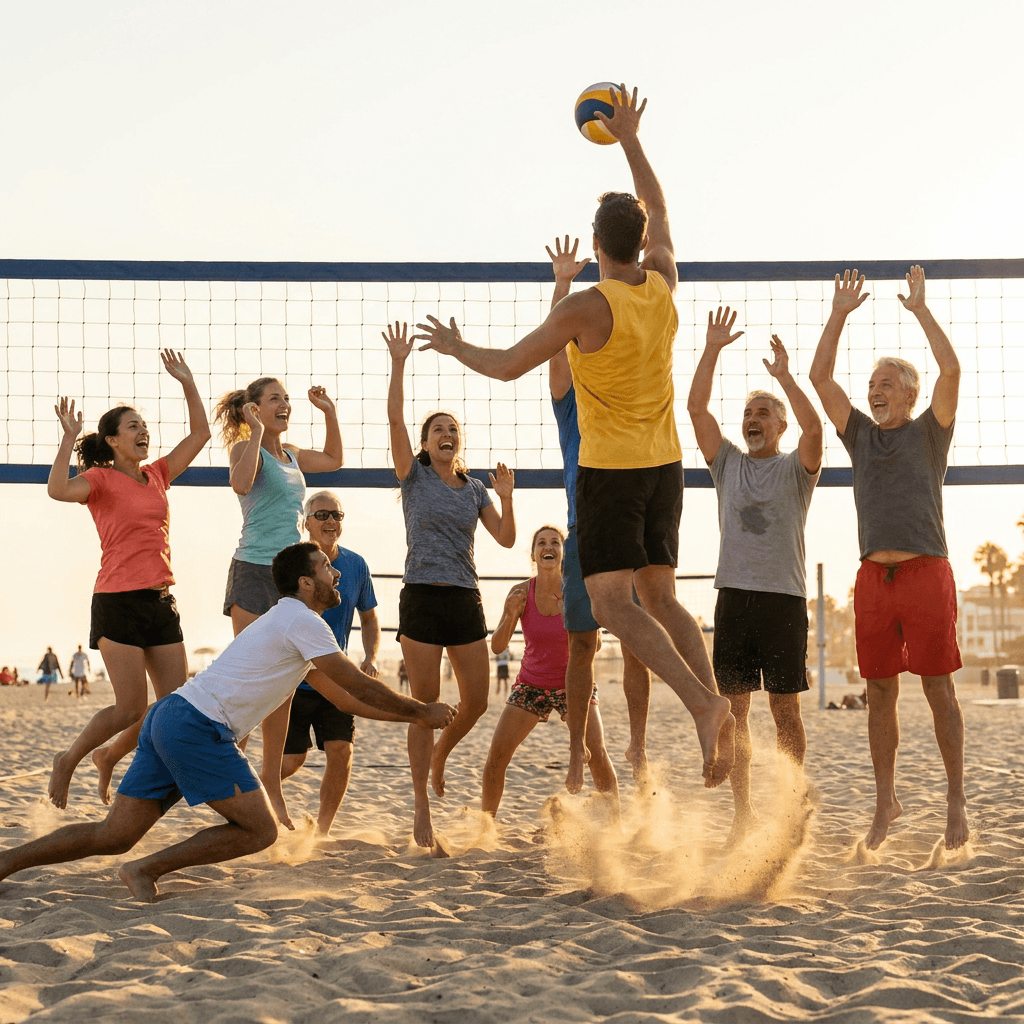
What Team Building Actually Looks Like
Not trust falls. Not forced fun. Real activities that people actually want to do.



Explore More Team Building Guides
Skip the Setup. Run This Playbook on Actify.
Actify handles scheduling, tracking participation, rewards, and reporting — so you can focus on your team, not logistics.