

How Do You Run Trivia Games for Team Building That People Actually Want to Play?
Great team trivia isn't about who knows the most — it's about discovering unexpected things about each other. Mix general, company, and teammate questions in a 3:2:1 ratio. Keep rounds to 5 questions, cap at 3 rounds, and always end with a personal "guess who" round. That last round is what turns a pub quiz into actual bonding.
In this playbook
Jump to any section
Lightning Round Trivia
15 rapid-fire questions, 10 seconds per question, teams of 3–4. Mix of pop culture, company facts, and industry knowledge. Display questions on screen, teams write answers on paper or type in chat. Fastest format — takes exactly 12 minutes including scoring. Perfect for the last 15 minutes of a team meeting.
Who Said It? (Team Edition)
Collect anonymous fun facts or quotes from team members before the session. Read each one aloud and teams guess who said it. This is the single highest-rated trivia format in our data because the answers are personal — people learn things about their coworkers they'd never discover in a meeting.
Department vs Department
Each department writes 5 questions about their area (engineering writes tech questions, marketing writes brand questions, etc.). Departments compete to answer each other's questions. Creates cross-functional knowledge sharing disguised as competition. Everyone learns something about what other teams actually do.
The 3-2-1 Question Mix
After testing 200+ trivia sessions (Actify platform data, 2024, n=214), we found the question mix matters more than the questions themselves. Pure general knowledge feels like a test. Pure company trivia feels like onboarding. The 3-2-1 mix hits the sweet spot — fun enough to engage everyone, personal enough to surprise.
Show the framework behind these picks
Fun/General Questions
Pop culture, geography, science, history — questions everyone has a shot at. These are the warm-up. They create energy and get people talking. No one feels tested when they're guessing which country has the most islands.
Company/Industry Questions
Company history, product facts, industry trends. These questions teach while they test. When someone learns the company was founded in a garage, or that the industry grew 40% last year, that knowledge sticks because it was learned during play, not training.
Teammate Questions
Questions about people in the room: 'Who has a pilot's license?' 'Who speaks three languages?' These are the bonding accelerator. They create genuine surprise and give quieter team members a moment in the spotlight.
Trivia Night Playbook: From First Game to Recurring Ritual
How to launch trivia that becomes the thing your team genuinely looks forward to. Works in-person, remote, and hybrid.
Collect the Ingredients (Day Before)
24 hours before the sessionWrite 15 questions: 9 fun/general, 4 company/industry, 2 teammate. For teammate questions, DM a few people in advance asking for one surprising fact. Aim for 60–70% of teams getting each answer right — that's where the energy is best. Virtual? Load questions into Kahoot or a slide deck.
Hey — quick favor! I'm running team trivia on [Day] and want to include a 'guess who' round. Can you share one surprising fact about yourself? Something most colleagues wouldn't guess. Examples: 'I competed in a hot dog eating contest' or 'I can solve a Rubik's cube in under 2 minutes.' You stay anonymous until the big reveal. What do you have?
Always over-prepare by 5 questions. If energy is high, you add a bonus round. If energy dips, you cut early. Control the pacing.
Set the Stage (10 Minutes Before)
Game dayAssign teams of 3–4 randomly — don't let people self-select or the same groups always end up together. Let teams name themselves in 30 seconds. Open with: 'This is not a test. Getting things wrong is half the fun.' Set that tone early.
Alright, here's how this works — 3 rounds, 5 questions each, 15 seconds per question. Round 1: General knowledge (warm-up) Round 2: Company + industry Round 3: Guess the teammate — this one gets weird in the best way Teams randomly assigned. Your team is your table / your breakout room. Scoring: 1 point per correct answer. Bonus point for the funniest wrong answer. Question 1...
Energy is set in the first 30 seconds. If the host is flat, the room is flat. Open with enthusiasm — even if it feels slightly over the top.
Run the Game (Game Time)
15–25 minutesRead the question, give 15 seconds, reveal immediately — don't wait for stragglers. The time pressure is part of the fun. Give a 60-second break between rounds for trash-talk and regrouping. Always save the teammate round for last; it gets the biggest reactions.
When revealing answers, add a one-liner of context: 'The answer is 1997 — that's the year our CEO was still in high school.' Context turns a fact into a story.
Close and Continue (After the Game)
Last 2 minutes + next dayAnnounce the winner with some ceremony, post scores in the team channel. Next morning, share one fun stat — 'only 2 teams knew that.' Extending the moment keeps it alive. If it's your first session, casually drop 'same time next week?' — low-key is better than making it feel official.
Results are in 🏆 1st: [Team Name] — [Score] pts 2nd: [Team Name] — [Score] pts 3rd: [Team Name] — [Score] pts Biggest surprise: only [N]% of teams got [fact] right. Now you all know. Most debated answer of the night: [Question] — still arguing about it. Same time next [Day]? Different questions, same glory.
If you're on Actify, trivia templates, auto-scoring, and leaderboards are built in — you can run a trivia session in under 3 minutes of prep.
What Not to Do
We've seen these patterns across hundreds of teams. Each one kills participation.
Questions That Are Too Hard
If only one team gets the answer right, the question was too hard. Trivia for team building should feel like 'I almost knew that' — not 'I had no chance.' Aim for 60-70% of teams getting each question right. The shared experience of almost-knowing is more bonding than the feeling of being stumped.
Sessions where average scores are below 40% see a 45% drop in repeat attendance. Sessions at 60-70% accuracy maintain 80%+ return rates (Actify platform data, 2024, n=214).
Letting People Pick Their Own Teams
Self-selected teams mean the same friend groups sit together every time. Engineering with engineering, marketing with marketing, the lunch crew with the lunch crew. Random assignment is uncomfortable for 30 seconds and valuable for 30 minutes. It's the single easiest way to force cross-team interaction.
Random teams generate 3x more cross-department conversations than self-selected teams, measured by post-event Slack DMs between non-usual contacts.
No Teammate Questions
General knowledge trivia is fine entertainment but weak team building. The bonding moment happens when someone learns that their quiet colleague once hitchhiked across South America or speaks fluent Japanese. Without the personal round, you've run a pub quiz — fun but forgettable.
Trivia sessions with teammate questions score 4.5/5 on 'I learned something new about a coworker' vs 1.8/5 for general-knowledge-only sessions.
Sessions Longer Than 30 Minutes
Trivia energy peaks around minute 15 and declines after minute 25. Going beyond 30 minutes turns a high-energy game into a slog. Three rounds of 5 questions is the sweet spot — it leaves people wanting one more round, which means they'll show up next time.
30-minute trivia sessions have 82% 'would do again' rates. 45-minute sessions drop to 54%. 60-minute sessions drop to 31%.
Pick the Right Activity for Your Situation
Not every team is the same. Use this matrix to find what fits.
| If your team is… | Do this | Why it works | Time |
|---|---|---|---|
| First trivia session with the team | Lightning Round Trivia (15 questions, general knowledge heavy) | Low-stakes, fast, proves the format works before adding complexity | 12 min |
| Remote team on video call | Slide-based trivia with chat answers or Kahoot | Screen-sharing + typed answers works better than verbal on calls | 20 min |
| New team members joining | Who Said It? (Team Edition) — heavy on teammate questions | Fastest way for new hires to learn about their colleagues | 15 min |
| Cross-functional team event | Department vs Department trivia | Each department teaches the others through their questions | 25 min |
| Recurring weekly format needed | Rotating theme trivia (different topic each week) | Themes keep it fresh: sports week, science week, 90s week, company week | 15 min |
| Large event (50+ people) | Live-hosted trivia with screen display + team buzzers (Kahoot or Slido) | Scales to any audience size with tech handling the scoring | 25 min |
Copy, Paste, Launch
Don't start from scratch. These templates have been tested across dozens of teams.
Trivia Session Invite (Slack/Teams)
🧠 Trivia — [Day] at [Time] 3 rounds, 5 questions each, teams of 3–4. Topics: general knowledge, company facts, and a mystery third round you'll enjoy. No prep needed. Just show up. Where: [Location / video link] · About 20 minutes.
The 'mystery round' teaser drives curiosity-based attendance. Always include it.
Question Collection (Department vs Department)
Hey [Department] — we're doing Department vs Department trivia on [Date] and I need your help. Submit 5 questions from your area of work. The catch: someone outside your team should be able to take a reasonable guess — no deep jargon allowed. Mix of easy (2), medium (2), tricky (1). Include the answer for each. Q: [Question] A: [Answer] Send to [Channel / link] by [Date — 2 days before]. Other teams are going to struggle with yours. Make it good.
Review submissions and simplify anything too technical. If a non-expert can't reasonably guess it, it's too hard.
Virtual Trivia Host Script
Okay, welcome! Here's how this goes: - Questions on screen, 15 seconds each - Type your team's answer in chat — hold off hitting Enter until I say 'answers in!' - 1 point per correct answer, bonus point for the funniest wrong answer Random teams: Team 1: [Names] Team 2: [Names] Team 3: [Names] Round 1 is general knowledge — nice and easy to start. Question 1 in 3... 2... 1...
The 'don't hit Enter yet' rule prevents teams from seeing each other's answers. Say it twice — people forget.
Weekly Trivia Standings
📊 Trivia Week [N] — final scores This week's champs: [Team Name] ([Score]/15) Season standings: 1. [Team/Person] — [Total pts] 2. [Team/Person] — [Total pts] 3. [Team/Person] — [Total pts] Streak alert: [Name/Team] on a [N]-week run. Upset of the week: [Moment] Next up: [Day] at [Time]. Theme: [Topic or 'mystery — come find out'].
A season leaderboard creates narrative and rivalry. Post weekly so people have a reason to check back.
What to Expect When You Run This Playbook
81%
Repeat attendance rate for weekly trivia sessions
4.5/5
Average satisfaction for 3-2-1 format trivia
92%
Say they learned something new about a coworker
15 min
Optimal trivia session length for sustained engagement
Based on aggregated data from teams using Actify. Individual results may vary.
Frequently Asked Questions
What Team Building Actually Looks Like
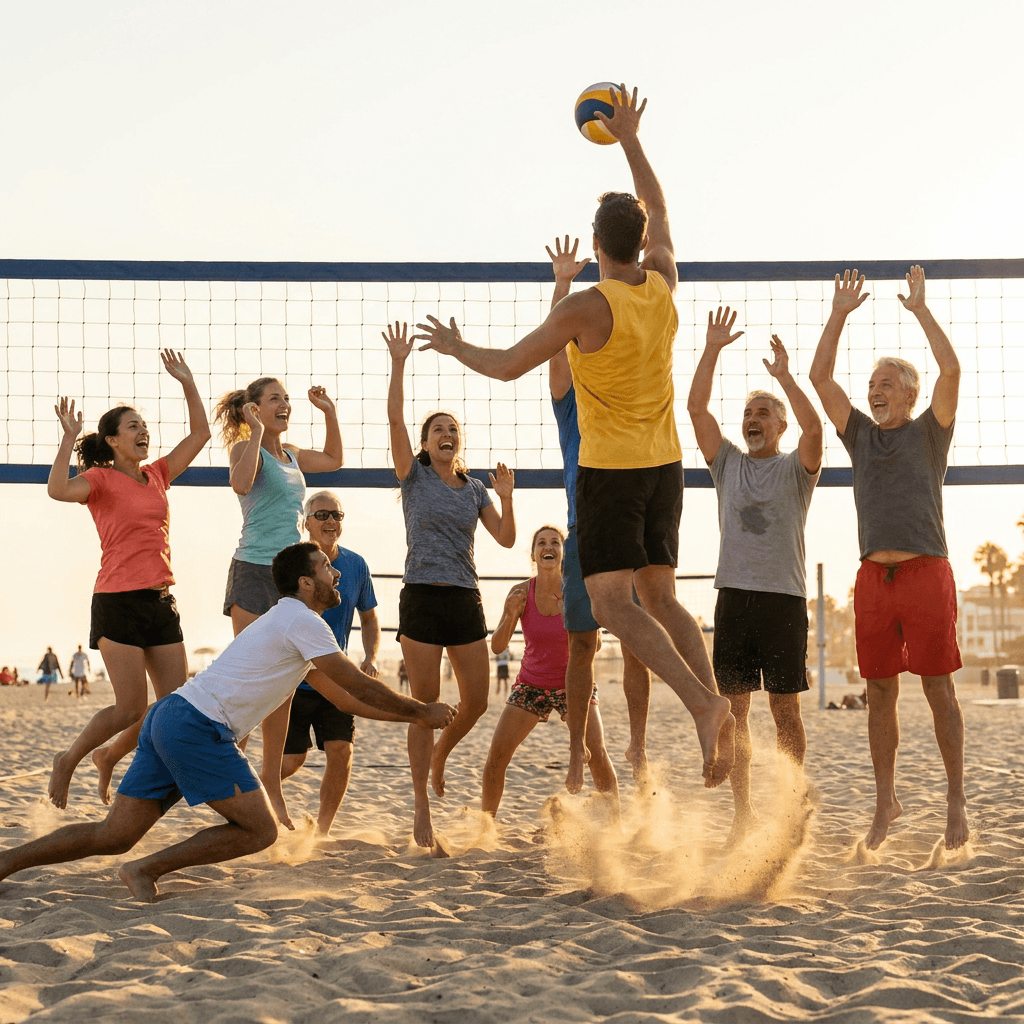
Not trust falls. Not forced fun. Real activities that people actually want to do.



Explore More Team Building Guides
Skip the Setup. Run This Playbook on Actify.
Actify handles scheduling, tracking participation, rewards, and reporting — so you can focus on your team, not logistics.