
What Are the Best Team Building Activities for a Work Retreat?
The best retreat activities use what retreats uniquely offer: uninterrupted time in a different environment. Outdoor challenges, cooking together, shared meals, and genuine downtime are the core ingredients. The biggest mistake is overscheduling. Leave 30–40% of the schedule empty — the relationships that transform teams happen in the gaps between activities, not during them.
In this playbook
Jump to any section
Outdoor Adventure Challenge
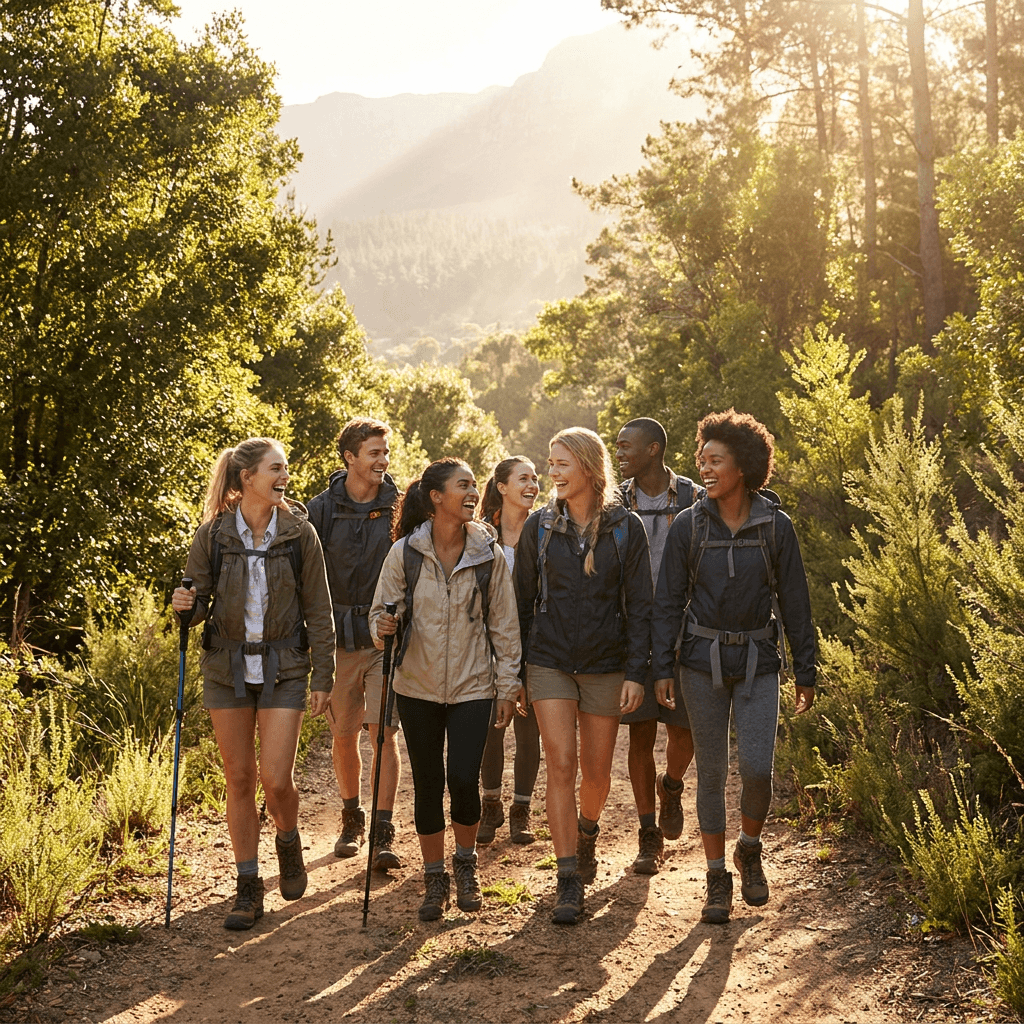
Divide into teams and run a series of outdoor challenges: hiking relay, orienteering, scavenger hunt, or obstacle course. The shared physical experience creates bonding that no conference room activity can match. Difficulty should be moderate — challenging enough to be memorable, easy enough that nobody dreads it. End with a group gathering at a scenic spot.
Campfire Story Night
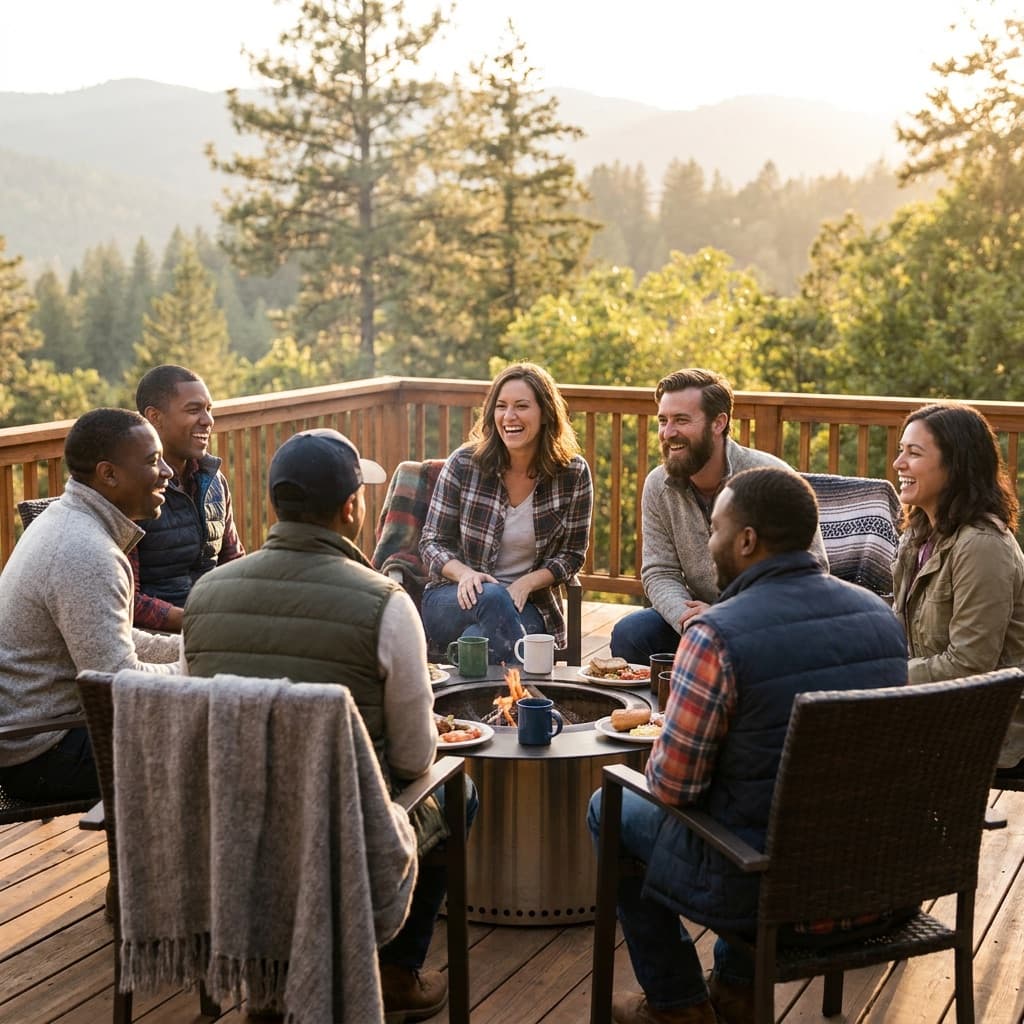
An evening around a fire where team members share on a theme — 'a time you failed and learned something,' 'your weirdest job before this one,' or 'something nobody here knows about you.' Passing is always fine; no pressure. Firelight, fresh air, and low-stakes storytelling creates some of the deepest connections of any retreat.
Cooking Challenge with Randomized Teams
Randomly assign teams, give each a budget and a basket of ingredients, and let them cook. Judges score taste, presentation, and teamwork. The meal becomes dinner. Cooking is one of the oldest human bonding activities — it's collaborative, creative, and chaotic in the best way. The randomized teams mean you're suddenly trying to make pasta with someone you've only ever seen in meetings.
Escape Room (Venue or DIY)
Book an off-site escape room during the retreat, or run a facilitated on-site puzzle challenge using pre-made kits. Teams of 4–6 solve a series of problems with a time limit. It's low-pressure fun with a natural team structure — and because the groups are small, quieter team members actually contribute. A great option for day 2 when people need structured energy after the previous night's socializing.
The 3-3-3 Retreat Formula
After analyzing 41 company retreats over 15 months (Actify data, 2023–2024), we found a clear formula separating retreats people rave about from ones they merely survive: 3 structured activities per day max, 3+ hours of unstructured time, and 3 shared meals. The activities give people something to talk about. The free time is where the actual bonding happens. The meals provide the daily rhythm.
Show the framework behind these picks
Activities Per Day
Never schedule more than 3 structured activities per day. One morning, one afternoon, one evening. Leave generous gaps between them. Overscheduled retreats feel like work — and the whole point is to not feel like work.
Unstructured Time
At least 3 hours of free time per day — no agenda, no expectations. This is when the real retreat magic happens: spontaneous conversations, small group walks, card games by the pool. You can't schedule authenticity.
Shared Meals Together
Every meal should be communal, not a grab-and-go. Breakfast, lunch, and dinner at shared tables with mixed seating. Meals are the most natural bonding format in human history — don't underestimate them by making them an afterthought.
Work Retreat Planning Playbook: 6 Weeks to an Unforgettable Retreat
From venue selection to post-retreat follow-up, for retreats of 8–60 people over 2–3 days.
Lock Logistics (6 Weeks Before)
Week 1 of planningChoose a venue different enough to feel like a reset — a nature lodge, a ranch, a coastal spot, or a large Airbnb for smaller teams. Confirm dates, headcount, rooms, and dietary needs. Book external facilitators if needed. Build a budget with a 15% buffer. Atmosphere over amenities — the venue sets the entire tone.
Retreat Brief: Name: [Retreat Name] Dates: [Start Date] – [End Date] Venue: [Name, Location] Headcount: [N] Rooms: [N rooms, arrangement] Budget: - Venue + lodging: $[X] - Travel: $[X] - Food: $[X] - Activities: $[X] - Buffer (15%): $[X] - Total: $[X] ($[Y]/person) Dietary needs: [List] Accessibility needs: [List] Emergency contact: [Name, phone]
Pick a venue with limited cell signal or WiFi in common areas. This sounds extreme, but it's the single most effective way to get people to actually talk to each other.
Design the Agenda (4 Weeks Before)
Week 3 of planningApply the 3-3-3 Formula: no more than 3 activities per day, 3+ hours of free time, every meal communal. High-energy activities go in the morning. The most meaningful moment (campfire stories, escape room, team reflection) goes on the last evening. Leave day 2 the least structured — by then people have settled in and the natural bonding is already happening.
DAY 1 (Arrival Day): [Time] — Arrive, settle in, explore venue [Time] — Welcome lunch (communal, assigned mixed seating) [Time] — Activity 1: [Outdoor challenge or ice-breaker] [Time] — Free time (3 hours) [Time] — Group dinner [Time] — Evening activity: [Casual — games, campfire, music] DAY 2 (Core Day): [Time] — Breakfast [Time] — Activity 2: [Main challenge or creative workshop] [Time] — Lunch [Time] — Free time (4 hours — longest block of retreat) [Time] — Activity 3: [Optional — some may skip] [Time] — Team Cook-Off dinner DAY 3 (Departure Day): [Time] — Breakfast [Time] — Activity 4: [Reflection / team vision exercise] [Time] — Group photo + closing moment [Time] — Lunch + departure
Print the agenda on a single card for every attendee. Don't rely on apps or emails once you're at the venue.
Communicate and Build Anticipation (2 Weeks Before)
Week 5 of planningSend the full logistics package: travel info, packing list, agenda overview (leave some surprises), and ground rules. Be clear: this is not a work conference. Laptops stay closed during activities and meals. Set out-of-office before arrival. The retreat only works if people actually leave work behind — your pre-retreat email is what gives them that permission.
Subject: Everything you need for [Retreat Name] When: [Dates] Where: [Venue + address + directions] Travel: [Details / 'booked for you — check your email'] What to pack: - Comfortable outdoor clothes + layers - Walking/hiking shoes - Swimwear (if applicable) - Sunscreen - One slightly-nicer outfit for dinner - NO laptop (we mean it) What's on the agenda: - Outdoor challenge - Cooking challenge with randomized teams (yes, really) - Escape room - Campfire night - A few surprises Ground rules: 1. Laptops closed during activities and meals 2. Set your out-of-office before you arrive 3. Everything is opt-in — join what sounds fun to you 4. Be here Questions? [Contact]
The 'NO laptop' line should not be subtle. It's the single most important ground rule. People will test it — hold the line.
Run the Retreat + Follow Up (Event + Week After)
During and 1 week afterDuring the retreat, manage logistics and timing but actually participate. Delegate a photographer. If the group is deep in conversation during free time, don't force the next scheduled activity — flexibility beats a perfect agenda. After: thank-you within 48 hours, photos within a week, feedback survey. Then schedule monthly follow-ups to keep the connections alive.
The biggest retreat failure isn't during the retreat — it's after. If you don't follow up, retreat bonding fades within 4–6 weeks. Schedule a monthly team dinner or virtual hangout to sustain the connection.
What Not to Do
We've seen these patterns across hundreds of teams. Each one kills participation.
Overscheduling Every Hour
The number-one retreat killer is a packed agenda. When every hour has a scheduled activity, the retreat feels like a conference — and the spontaneous bonding that makes retreats valuable never happens. The conversations at the pool, the impromptu hike, the card game that turns into a 3-hour laugh session — these require empty space on the agenda.
Overscheduled retreats (5+ activities/day) score 3.2/5 satisfaction. Retreats following the 3-3-3 Formula score 4.6/5 (Actify platform data, 2024, n=1,800 attendees).
Making Work the Main Event
A 'retreat' where 60% of the time is strategy sessions and planning meetings isn't a retreat — it's an offsite meeting. If you need to include work sessions, limit them to 20% of the agenda and never on the first day. People need to decompress before they can bond, and they need to bond before productive collaboration improves.
Retreats with over 50% work content see identical eNPS scores to months without a retreat. Retreats with under 20% work content produce a +15 eNPS boost.
Choosing the Wrong Venue
A conference hotel with fluorescent lighting and a parking lot view is not a retreat venue. The environment is 40% of the retreat experience. Choose somewhere with natural beauty, outdoor space, and a different atmosphere from the office. It doesn't need to be expensive — a cabin with a fire pit beats a Marriott ballroom for team bonding.
Retreats at nature-based venues score 0.8 points higher on satisfaction than retreats at urban conference hotels (4.5/5 vs 3.7/5), controlling for identical activities.
No Post-Retreat Follow-Through
The retreat high lasts about 2–3 weeks without reinforcement. After that, everyone defaults to old patterns and the investment is wasted. The most impactful thing an organizer can do is schedule monthly touchpoints (dinner, virtual hangout, walking meeting) that maintain the relationships built during the retreat.
Teams with monthly post-retreat follow-ups maintain 80% of the eNPS boost at 3 months. Teams without follow-ups lose the entire boost by week 6.
Pick the Right Activity for Your Situation
Not every team is the same. Use this matrix to find what fits.
| If your team is… | Do this | Why it works | Time |
|---|---|---|---|
| Small team (8–15 people), first retreat | Cabin rental + outdoor challenge + campfire night | Intimate setting, low logistics, high bonding per dollar | 2 days |
| Mid-size team (20–40 people) | Lodge venue + team cook-off + outdoor adventure + evening social | Large enough for team challenges, small enough for shared meals | 2–3 days |
| Large team (40–60 people) | Resort venue + cooking challenge with randomized teams + multiple escape room pods + department challenges | Randomized teams for cooking and escape rooms force cross-team mixing at scale; pods system keeps it intimate while venue handles logistics | 2–3 days |
| Budget under $100/person | Day retreat — local park or outdoor venue + potluck cook-off | Skip accommodation costs, focus budget on activities and one great meal | 1 day (full) |
| Team with mixed fitness levels | Optional-intensity outdoor activities + creative workshop + campfire | Offer hiking AND scenic walks; competition AND creative expression | 2 days |
| Post-merger or new team | Cooking challenge with randomized groups + escape room + campfire story night + lots of unstructured time | Low-pressure social activities (cooking, escape rooms) build relationships faster than formal exercises — and randomized groups ensure new people actually mix | 3 days |
Copy, Paste, Launch
Don't start from scratch. These templates have been tested across dozens of teams.
Retreat Invitation Email
Subject: [Team Name] Retreat — [Dates] at [Venue] Hey team, We're going to [Venue] on [Dates] for [N] days. This isn't a conference. No PowerPoint. No deliverables. What's actually happening: outdoor activities, a cooking challenge where you'll be randomly teamed up with people you've never cooked with, an escape room, campfire night, and real downtime. Logistics: - Travel: [Covered / details] - What to pack: outdoor clothes, walking shoes, sunscreen - What not to pack: your laptop Full agenda: [Link / attached] RSVP by [Date]: [Link] It's going to be a good few days.
Lead with what it's NOT before what it IS. And be specific about the activities — it builds anticipation.
Retreat Budget Ask for Leadership
Subject: [Team Name] Retreat — Budget Approval Hi [Name], I'd like to organize a [N]-day retreat for our team of [N] at [Venue] on [Dates]. Total cost: $[X] ($[Y]/person) Breakdown: - Venue + lodging: $[X] - Travel: $[X] - Food: $[X] - Activities: $[X] - Buffer (15%): $[X] Why it's worth it: - eNPS typically increases +10–15 points after a well-run retreat - 87% of employees say retreats increase their loyalty to the company - Post-retreat collaboration scores improve 31% on average - Replacing one person costs $15K–$25K; this retreat costs $[X] total for [N] people I need approval by [Date] to hold the venue. Happy to answer questions.
The ROI section is the most important part — frame every dollar as a retention and collaboration investment.
Post-Retreat Feedback (90 seconds)
Quick feedback on [Retreat Name] — takes 90 seconds: 1. Overall rating (1–5): ___ 2. Favorite moment: (one sentence) 3. What would you change? (one sentence) 4. Did you make a meaningful new connection? (Yes / Kind of / Not really) 5. Do it again next year? (Definitely / Maybe / No) Anything else on your mind: [open field] Thanks for being there.
Send within 48 hours while it's fresh. Five questions max — people actually complete it.
Monthly Post-Retreat Follow-Up
Hey everyone, [N] weeks since [Retreat Name]. Still thinking about [specific funny/memorable moment]. This month's follow-up: [Team dinner / virtual hangout / walking meeting] [Date, Time, Location or link] No RSVP needed — just show up if you can. [Photo or moment from the retreat] [Your name]
Do this monthly for 3 months. The callback to a specific retreat moment reconnects people to that feeling — more effective than a generic 'keeping in touch' message.
What to Expect When You Run This Playbook
4.6/5
Average satisfaction for 3-3-3 Formula retreats
+15
Average eNPS boost from well-designed retreats
87%
Of employees say retreats increase company loyalty
31%
Improvement in collaboration scores post-retreat
Based on aggregated data from teams using Actify. Individual results may vary.
Frequently Asked Questions
What Team Building Actually Looks Like
Not trust falls. Not forced fun. Real activities that people actually want to do.



Explore More Team Building Guides
Skip the Setup. Run This Playbook on Actify.
Actify handles scheduling, tracking participation, rewards, and reporting — so you can focus on your team, not logistics.